
James Bloedel
Director of Personnel Development and Operations – MML Creative Agency
Photography by Ian Rempel
James Bloedel is the Director of Personnel Development and Operations for the Moody Media Lab’s Creative Agency in Chicago, IL. He oversees a team of 6 people. We sat down and talked about
developing people, community, and good workspace practices.
So Director of Personnel Development and Operations… what exactly is your job description?
I’m in charge of releasing resources and opportunities to help our creatives grow. So the creative agency is a team of creatives that specializes in things like print media, graphic design, video, project management and event coordination. I’m basically in charge of overseeing all their projects and helping them grow not only as people but as creatives in whatever their disciplined field is. And then from an operations standpoint I oversee payroll, I oversee contracts and if my creatives ever get into a jam with a client, I come in as a mean older brother: “Hey I understand we’re having some difficulties how can I be of assistance, et cetera.”
What’s it like being in charge of people that specialize in things that aren’t necessarily in your area of expertise?
Yea. It’s hard sometimes because while everyone on the team is very creative, they think very differently in their disciplines. So I think differently about video content and someone does about print media. At the end of the day, you have to find those bridges of, “Well we’re all creators, we’re all artists, and we’re creating to solve the same problems.” Clients come to us with problems and we solve them creatively. So you kind of have to burrow down to that really base level of “We make stuff and let’s bond over that.”
I love it. Let’s rewind a bit. James, what was the first job you ever loved?
Hm. The first job I ever loved… when I was in high school I worked at Jimmy John’s.
Nice! Wow, okay. You loved Jimmy John’s.
Yea I love Jimmy John’s. I still eat there all the time. And I think I loved it because while it was Jimmy John’s, I worked with a really awesome team of people. We could have been scooping manure or picking up trash on side of road. I was only 16, I was young, but I felt like I was part of this awesome group of people. I wasn’t going to work, I was going to hang out with friends who also worked at Jimmy John’s and we were going to do stuff together.
And it was all because we had a manager that recognized that, yes it’s just a sandwich shop, but at the same time he really wanted us to feel like we were a part of a team.
Can you think of anything specifically that helps create that feeling of friendship or family on the team?
Yeah definitely. So when a good manager is building his or her community, they need to make it clear that it’s a safe place to fail, it’s a safe place to succeed, and no matter what happens inside of that, you’re still going to be loved and cared for in that space. Because that means that when you do fail, your family is there to help pick you back up and help you learn from your mistakes and when you win they’re there to celebrate with you.
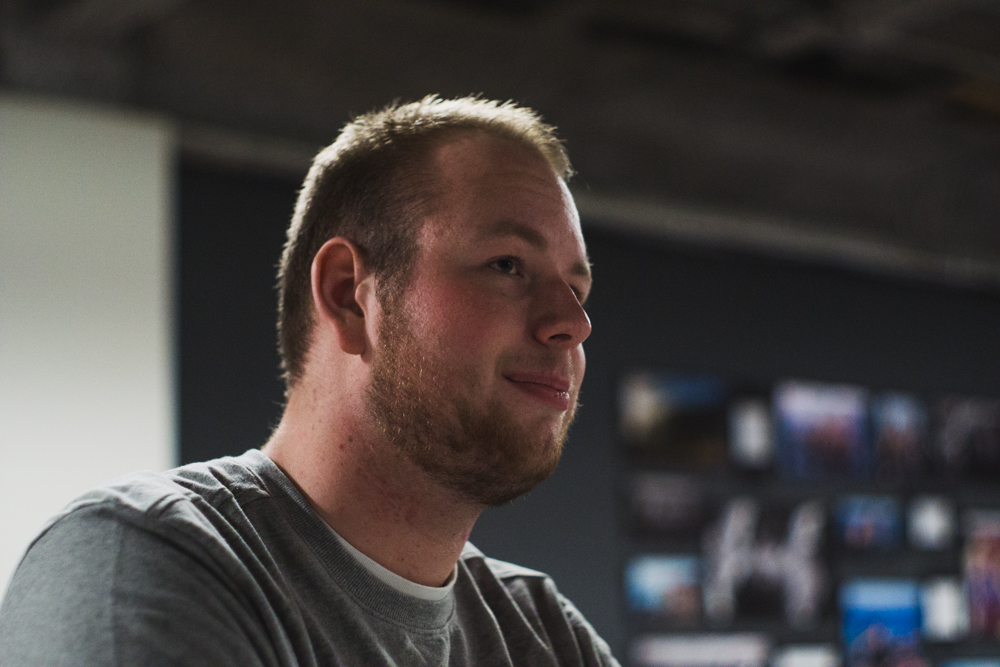
“So when a good manager is building his or her community, they need to make it clear that it’s a safe place to fail, it’s a safe place to succeed, and no matter what happens inside of that, you’re still going to be loved and cared for in that space.”
How has your personal upbringing affected the way you think about work?
So I’m from a very hard-working family. My dad managed to break out of a pretty bad home situation with a lot of alcoholism present… which is amazing.
Wow, that is amazing.
My dad had to drop out of college during his first semester because all the money he has saved up to go to school had been drunk away by his own father. So from a very early age, my dad had to drop out of college, get a factory job and start building from there. At one point he had to take care of his mom when his dad was very drunk and left her.
Craziness. Long story short, my dad is now the Vice President of Sales for the place he works for. He has no formal college education. He’s operating in an environment where most of his colleagues have an MBA. My dad got there because he really cares about people and he’s hard-working.
I’ve learned from him that you can get anything done if you work hard enough at it. He’s had a huge influence in my life.
Let’s fast-forward to now. You’re at Moody running this Creative Agency. Why do you keep working here?
When I was a freshman here at school there was a senior named Matt Siler. Matt and I both had a very similar love for video, and creativity, and teams, and building things… and Matt took me under his wing like the second I met him. I don’t know what he saw in me because I didn’t see anything there, but he saw it, and I attribute where I am today as an artist as a creative as a team leader to Matt because Matt was the first person to believe me that I can be all of those things. He gave me opportunities, he gave me chances to help out in areas that I was simply not qualified to be helping, but he still gave them to me. And this turned into an amazing mentorship-friendship. When I was a freshman he was actually running the agency. So to now, as a junior, be in that place that he was in, and look back and have the opportunity to give back…. it just— it feels really awesome.
This is pretty personal for you, then.
It’s weird. It’s really weird.
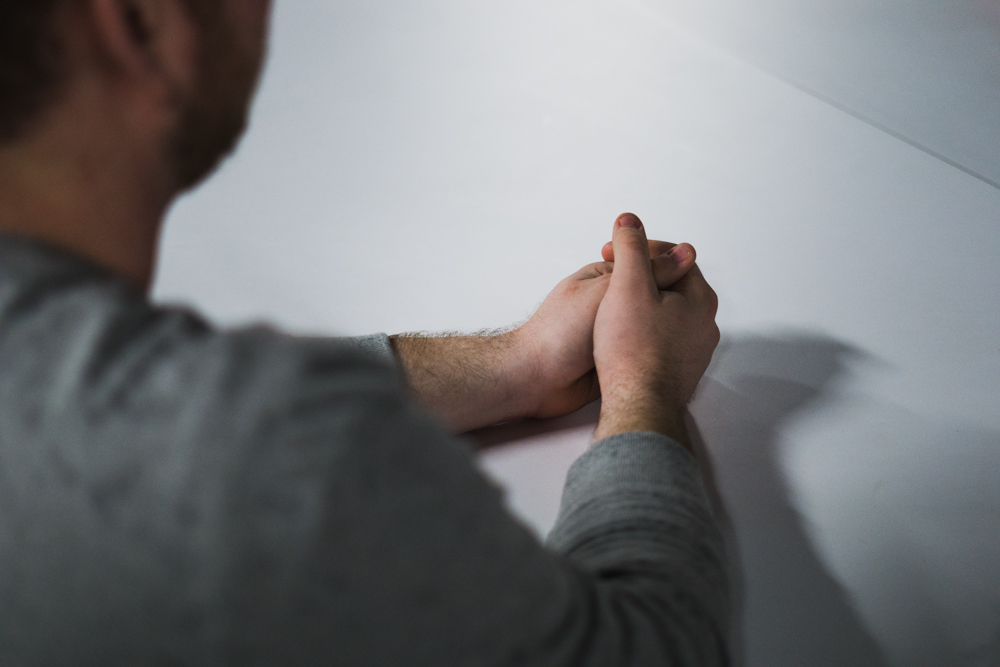
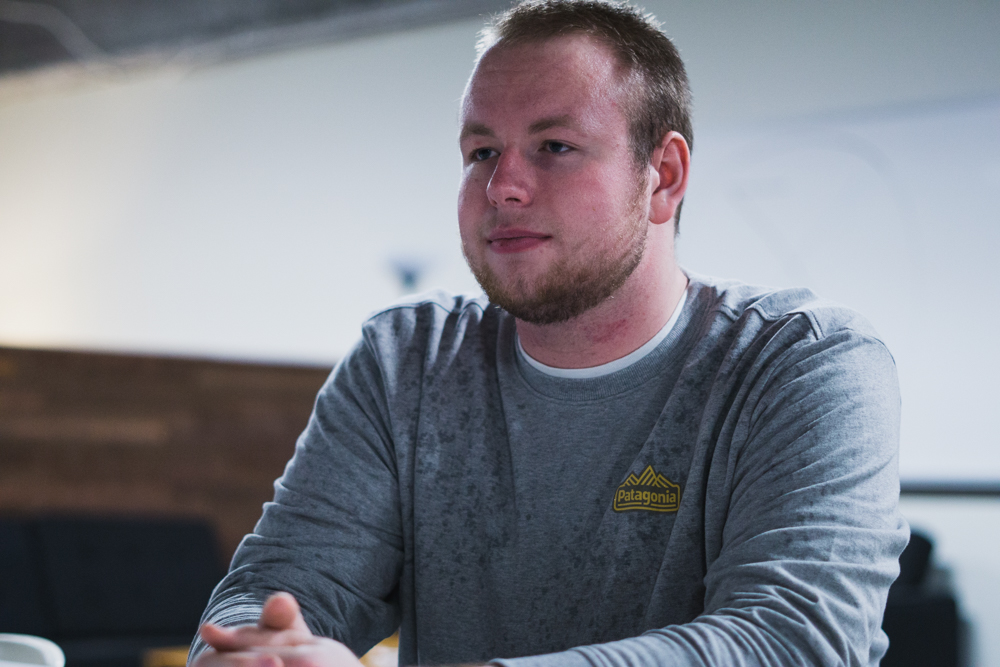
“He gave me opportunities, he gave me chances to help out in areas that I was simply not qualified to be helping, but he still gave them to me.”
What are some practical things like that that you guys do to develop your people personally?
So we have very young students and make them act as professionals. There are deadlines, there’s failure… you’re interacting with real-world clients. Some of this is simulated. Some of it’s not. If you fail, you really fail. If you bust a contract, we lose money, and that sucks. But it’s often those experiences where you learn and grow the most. I remember as a sophomore I got stuck… well, stuck’s a harsh word, but I was given a video project where, thing after thing after thing, nothing seemed to be going right. I had to actually sit down at one point and edit for a straight 14 hours to meet a deadline due to some things that had happened. But I learned a ton, and I grew a ton, and the mistakes I made on that project, I haven’t made again.
That’s the beauty of the agency. It’s not very often you get a platform like that to learn and fail in before you’re really in the real world. So this is what helps provide that experience. You get a little taste of it before, “Alright, fly! Get out of the nest and fly!”
James, what is your dream job?
*sigh* I get that question a lot especially as I get closer to graduating. And I’m still trying to narrow down what the title will actually be. I want to be a content creator who does good.
“Does good,” like, you do good things? Or do things well?
I want to be a content creator who does good things in the world. I can’t live in a world where I’m doing what I do— whether it be photography, or design, or communicating with a client— where I’m not making someone’s day better. I don’t just want to make money for the sake of making money. What I do has to bring some sanctification to the world. Otherwise, there’s just no point.
In the creative field, and in colleges, there’s a lot of competition. There’s a lot of: “You need to squash someone to go ahead.” I just want to create through collaboration. Not being cut-throat. Let’s do things together because when we’re all working together, there’s really no limit to what we can get done, even as students.
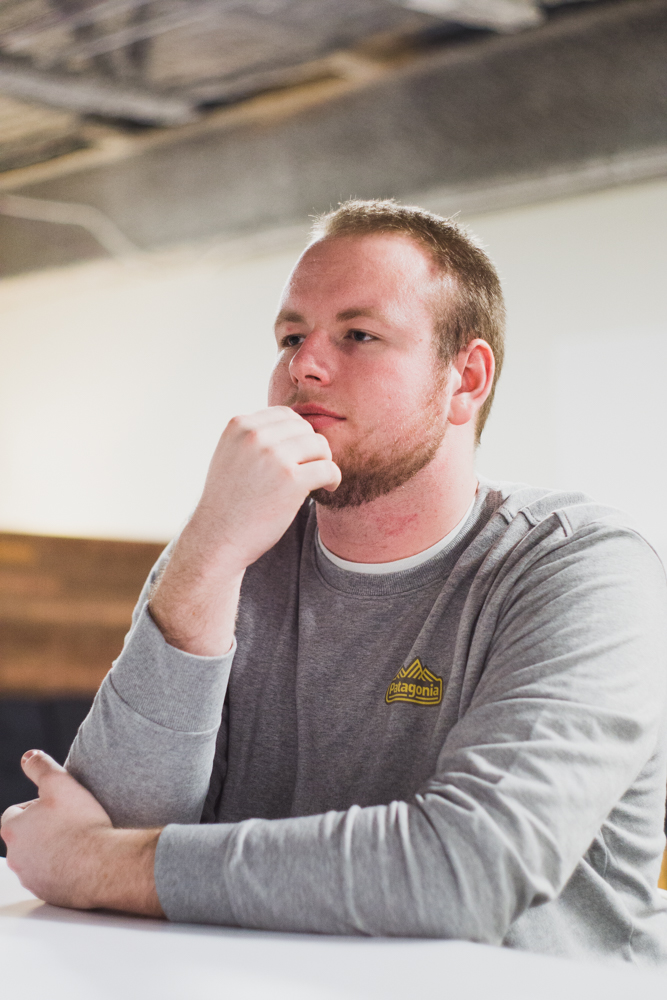
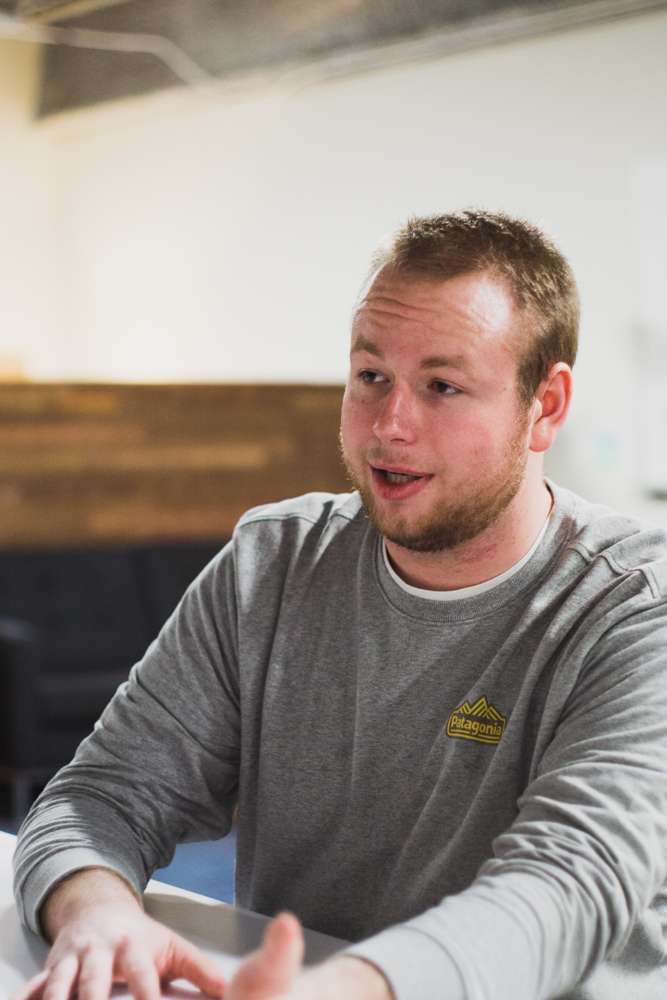
“I just want to create through collaboration. Not being cut-throat. Let’s do things together because when we’re all working together, there’s really no limit to what we can get done, even as students.”
Where does your inspiration and education come from these days? Who are you giving your ear?
Right now my big one is Jon Acuff. He’s a writer, blogger… he does a lot of things with businesses. I’m on different blogs all the time. There’s a designer in Milwaukee named Liz Carver who I super look up to. When I was just kind of starting out in the whole design world, I was seventeen or eighteen and I was briefly aware of her on the scene so I’m always on her blog and reading what she is doing.
YouTube tutorials? So this is super humbling. Even designers I know who have been in the field for years will tell me this. I’ll ask him how to learn skills and they say, “Well if you know the skills that you’re trying to find, just YouTube it.” Usually, it’s a 14-year-old who will teach you everything you need to know. It’s so humbling because it’s like, this 14-year-old is using screen capture teaching me After Effects. I’m like, “How do you have this equipment at 14 years old? I’m in college for this!”
Tripp and Tyler are some other people. They’re writers and comedians and they’re amazing. I really look up to them.
What are some practical things that every workspace or team needs to have?
Yea. That’s such a huge one even nowadays. One, you need a coffee maker. You need to caffeinate your team. *laughs*
Uh, you need a community workspace and you also need spaces where people can work alone. There’s so much goodness that can out of people collaborating and working in the same space, but at the same time, we still need to go off and be on our own to really develop and process what we’re going through, what we’re working on, and what we’re creating. Otherwise, we’re going to be like this weird collective where we’re just mirroring other people. We need to have that time to ourselves to figure out what we’re about, what we’re doing, asking ourselves “Who am I?” Then bringing that to that group table and saying, “How can we do our things together?”
What’s a deal-breaker in a workspace?
A work environment where collaboration is shut down. I know a lot of designers, a lot of teams, that are very narrow-minded in their process. There’s nothing wrong with having a process because that’s how you get work done. But never get to a point where you’re cutting other people’s opinions out. Because ultimately you’re making things for other people. In this industry, we’re making things to solve problems for other people. So we need other people’s input. I would never want to work for someone that had a close-minded system when it came to creating. It needs to be very open.
That space for communication.
Yeah.
Is that something that you always intentionally make clear? How does that play out?
So I tell my team that I’m available 24/7. Well, there are boundaries. I’m always available over Slack, email, things like that. You can talk to me. I also let my team know there are schedule times where I’m hanging out at this place, or I’m in my room, “I’ve got some cold sodas, want to come over and watch a movie?” Part of what we do in the agency is we schedule times were are going to hang out and not do anything work-related. We’re going to grab donuts. We’re going to visit another agency and see what they’re doing. Or we’re just going to get together and shoot pictures for fun. We try to make sure that we’re not always working together otherwise we’ll only ever work together.
Why is it important to do those things?
Because that’s what creates community. And we’re not going to create great art if you don’t have a great community. You’re going to have weird solo things that no one else gets because we’re crazy on the inside.
Thanks to James Bloedel and Ian Rempel for helping make things (like this story) wonderful.
If you're interested: reach out with a story of someone who makes their space wonderful.
koreykostek@gmail.com
site designed by Korey Kostek with help from Jack Doyle