
Harris Nash
Director of Wholesale – Ipsento Coffee
Photography by John Bloedel
Harris Nash is the Director of Wholesale at Ipsento Coffee in Chicago, IL. He was previously the General Manager and oversaw two coffee shops and their staff. He shared his thoughts on leadership, love for people, and motivation.
Harris, how long have you worked at Ipsento?
I’m going on three years now.
And what positions have you held since you’ve been here?
I started as a barista and on sandwiches, then I got certified in about half a month, which usually takes people a few months. Then I worked up to become a shift manager. Eventually I got interested in roasting, and after watching our roaster off-the-clock, I became a production assistant. Then I delivered coffee. From there the owner approached me and ask me to be a shop manager. So I left school to do that. Did it for a year, got to hire staff for our new shop, hired a shop manager and trained them, became general manager, and now I’m the director of wholesale.
Sheesh. And did you have any coffee or manager experience before this?
*Laughs* Absolutely not.
Has leadership been a part of your history at all?
Yeah… I mean— and I’ll get to this later— but I wouldn’t define what I’ve done as leadership.
Really it’s just me getting excited about being around people, and rallying people. It’s kind of involuntary. But like I said, I look back now and see, you know, maybe I was leading when I was on the baseball team and getting excited about this and that, and getting everybody excited together. The owner here has seen me as a natural leader. So he’s really poured into that and made me a bit more aware and helped me to be more intentional.
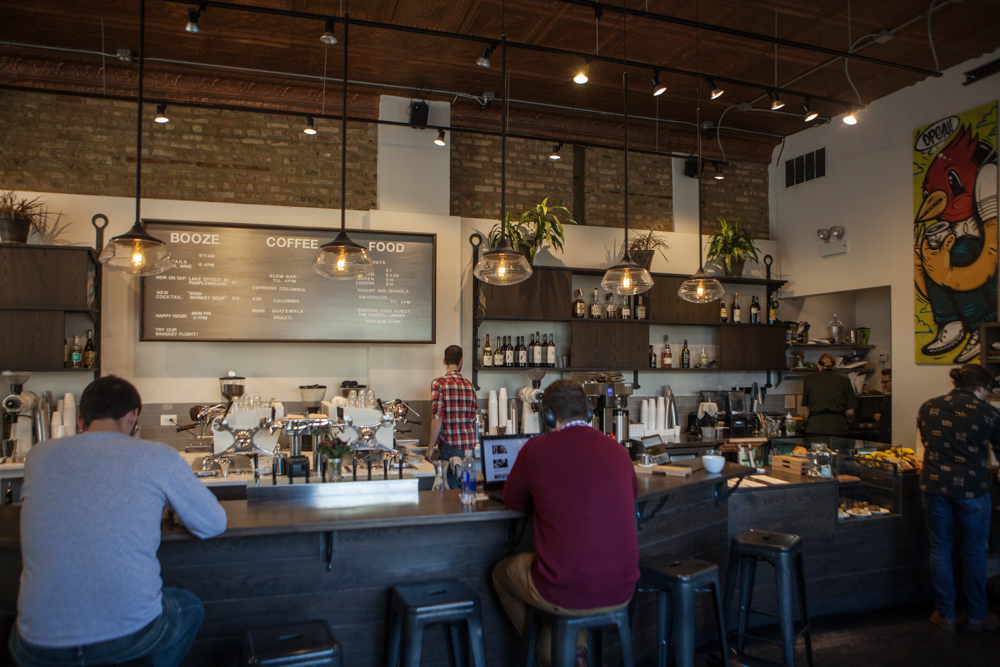
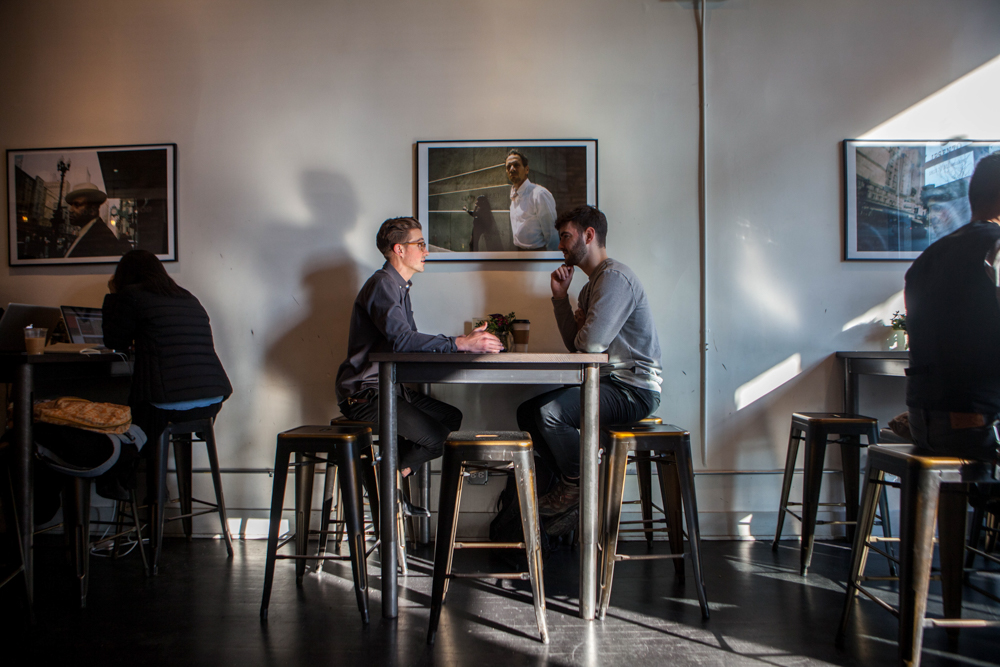
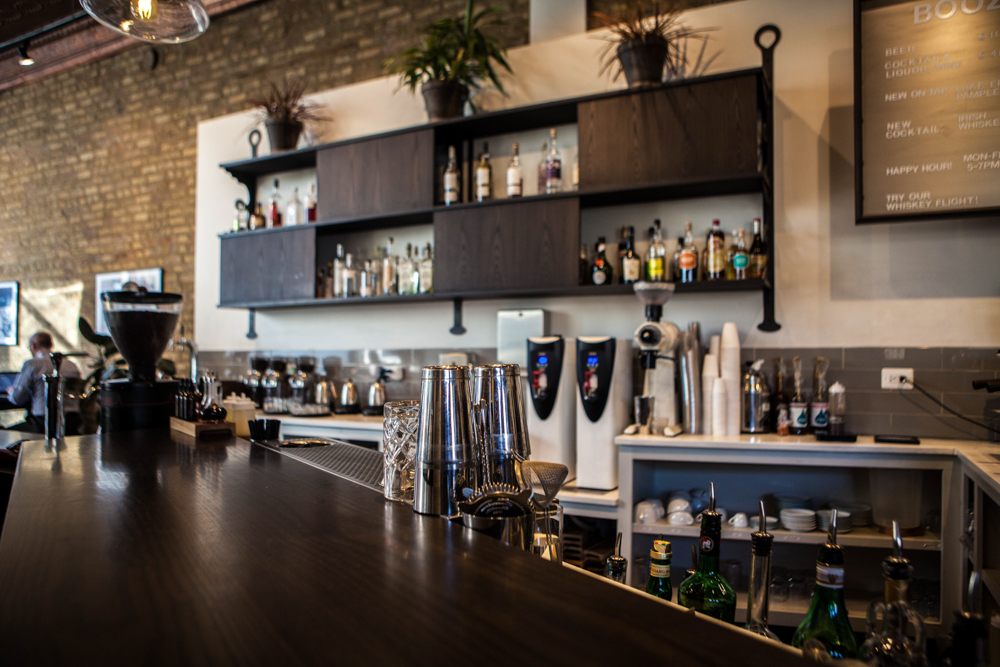
What was the first job you loved?
Kind of funny, it’s so different from what I’m doing now, but it was golf course construction. It was just construction work. I’ve always loved physical labor and had done yard work my whole life in Alabama, but this job taught me a lot. Even though there’s so much equipment these days to help you get work done quicker, like tractors and dump trucks, there’s certain things that those machines can’t help. That was where we came in. There would be days when me and two other dudes were just digging a 3-foot-deep trench for 200 yards. So it’d just be 3 days of that. And those days sucked. But at the end of the day you go home and you get to see this accomplishment: this giant trench you dug. There’s nothing like it.
What do you think it was about that job that made you love it?
I think it taught me an appreciation for all kinds of work. It also helps that I love getting to know people, because you really get to know the people you’re doing work with day after day.
“Really [leadership] is just me getting excited about being around people, and rallying people. It’s kind of involuntary.”
How did you navigate what it means to be in that management position?
Well, when I was asked to be a manager I was 20-years-old. And we had baristas that were as old as 28. I had been here less than a year and there were people that been here for four years or more. So taking into account that someone has been here four years, and they’re eight years older than me… for me to manage them would really require I continue to give them respect and trust. I decided I’m just going to lead them by example and by being very humble. It would be stupid not to be humble. I couldn’t even believe I was in this position. I don’t have any degree, I’d only been in the coffee industry less than a year… but I said, “Let’s just give it a shot. I’m going to be humble and do anything they’re willing to ask me to do.”
Did you have any resources or people that helped you?
Our roaster at the time had managed at Starbucks for 6 years. He had a lot to say about different interactions with employees. Also, the owner of the company, who had pretty much managed the shop for 3 or 4 years, let me follow him around like a duckling for 4 months and just said, “Watch everything I do, and listen to everything I tell you to do, and if you have any questions we can come back and show you how to do it again.” I owe 95% of my management and business experience to him and what he’s taught me and trusted me with. You can read all the resources you want, but until you’re thrown into that moment where something breaks and there’s a long line, you just gotta figure it out. There’s a lot of learning in those moments.
How did being a barista before you’re in this position change the way you approached managing?
That’s huge. And I didn’t even realize how much it would help, but, we had a manager before— they weren’t a fully certified barista— and they’d ask us to do things a certain way but had no idea how to do them themselves. So we still trusted and respected them, but we had our doubts. So now, sometimes on the busiest days, we’ll be under-staffed and our people are kind of panicking, I can better resonate with them and be a bit more empathetic because I know the situation isn’t easy, but I’ve been there too.
What do you think it is about working with baristas or in the food industry that might be different from other industries?
People who work in the food industry know that there’s a lot of turnover. If you ask anyone here about 90% of them will say that this is not the career they want to have forever. So it’s a temporary job to most everyone. It’s different, because it’s like, how do you keep people around and keep people excited to come in and do well? Because you can’t afford to pay that much more than minimum wage. I mean, tips help, but you’re still just doing customer service, food service, and some retail, and there’s not as much respect for the people working behind the counter in the food industry and retail.
So what are some things you do to counteract those things… low wages, lack of respect… how do you get people to stay and be excited?
I think it’d be harder at a fast food restaurant. But with us, we’re talking, this is some of the best coffee in the world! It’s grown by some of the most gifted producers who put so much care into it. It’s roasted and put through quality control twice a week… and we get to grind those beans and brew them and taste them and dial them in. There’s a certain thing about what we do that’s like, you’ve got to be passionate about it, otherwise, you’re not going to want to stick around and you won’t love it for long. It’s also just pouring into people and who they are. If I see a barista who’s getting yelled at or disrespected I’ll step right in front of them. Not that I’m their savior, but I know what it’s like to be in that position and I want to help take some weight off of them and remind them that the way they were treated has nothing to do with who they are personally and that we’re glad to have them.

“…for me to manage them would really require I continue to give them respect and trust. I decided I’m just going to lead them by example and by being very humble. It would be stupid not to be humble.”
You talked about passion, and how people need passion to stick around. What are some practical things you do to help instill passion into people?
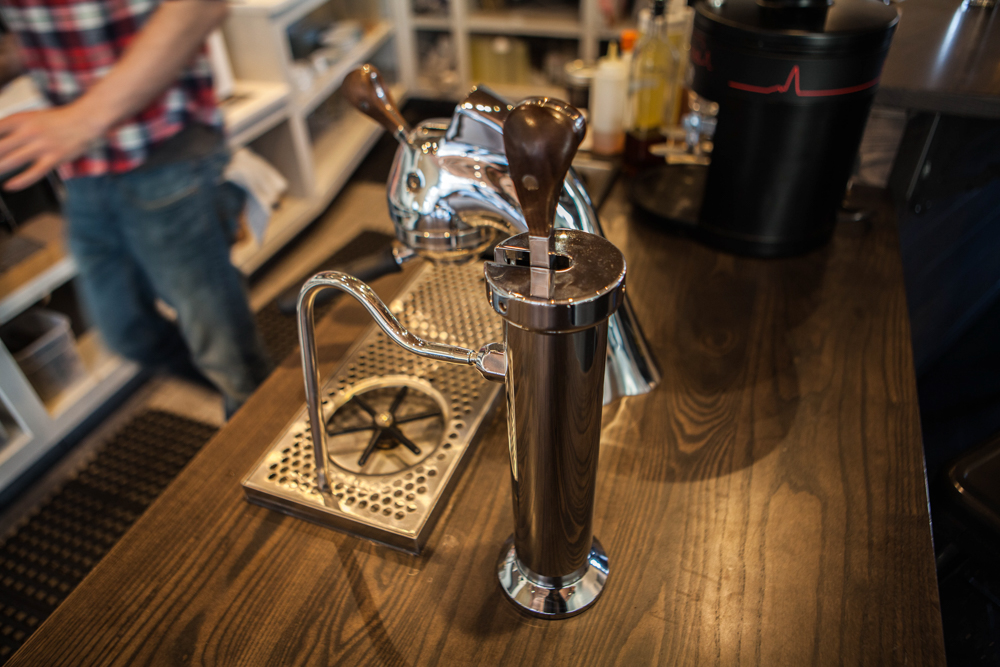
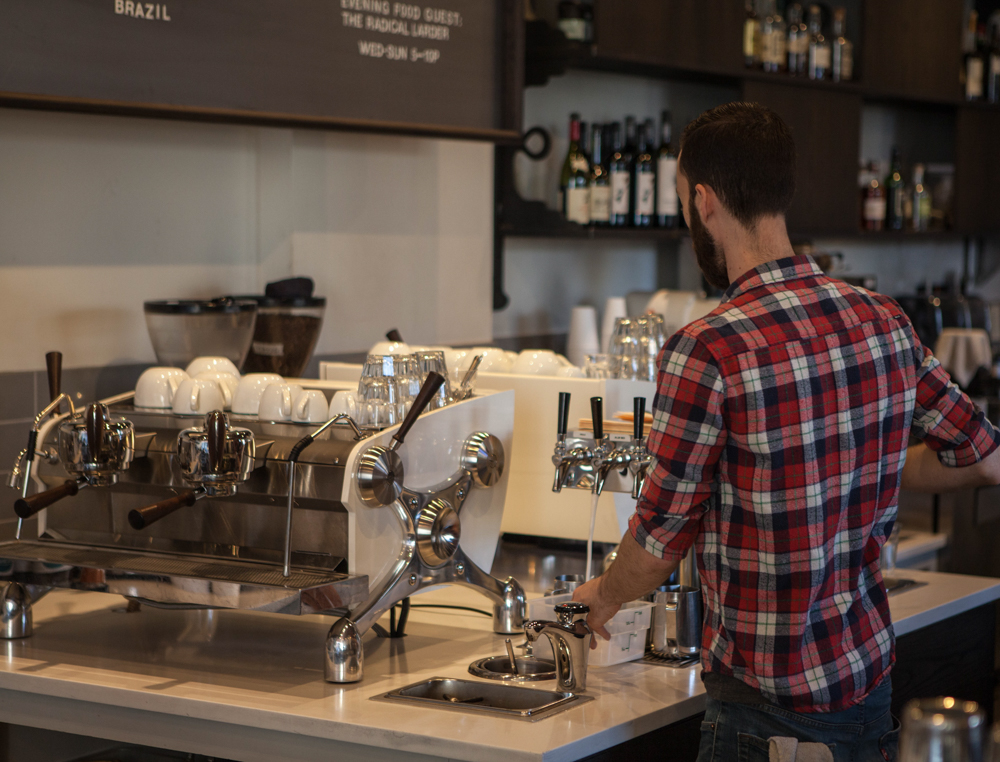
To be completely honest, that’s a struggle for us. I’ve learned to be really honest with people who are coming to work for us, telling them how amazing the coffee we source is and how amazing what we do is and that we have the only Slayer [espresso machine] in Chicago— just trying to tell them the weight of what we do. But I have to let them know the other side. Like, bottom line is, you’ll probably make one-fiftieth of the amount of pour overs and espressos than you do almond milk lattes, vanilla lattes or iced whatevers. And that’s the reality of it. That’s why it’s so easy to lose the passion. We have devoted a full-time trainer and staff developer whose job is to not only train them but to sit down and check in with people and ask how they’re doing, where they’re struggling, you know, checking in on their life.
Also, when someone gets fully certified we try to create pathways for them. We have 4 different pathways: management, roasting, business or teaching. We have classes they can shadow, they can shadow a roast… we’re trying to learn how to get people excited about work and have continual progression because things can get stagnant once you get to a certain point.
Yea. Making those opportunities clear from the get-go is huge.
Yeah, it is. It’s all stuff we’re working hard on now and trying to get feedback on.
How has your upbringing, with your parents or friends, affected the way you see work and your work ethic?
I used to have to cut grass in Alabama. Our yard is one entire acre of grass. You walk out my back door and that’s it. We owned it all. And all I had a push mower. So from age 12, it was my job to cut the entire yard. It took about four straight hours. It wasn’t torture, I would throw on some music and enjoy it, but I think having that has an expectation— that that’s a normal thing— helped me to see that when I have to clean a bathroom or when we have to close the shop, I just have to get the work done no matter how long it takes. And it wasn’t like, “Do this or else,” but it was like, “Work is important and let’s all work on this together.” While I was cutting grass, my dad was right beside me weeding. it wasn’t like he was inside watching TV, he was right there alongside us, and then we’d throw the football in the cut yard or jump in the pool or watch a football game. That work ethic that my dad instilled in me that, you know, work is important and satisfying and something you do together (we never have single or solo shifts here). That’s the stuff I really want to pass on to my kids.
What is your dream job?
If you asked me 3 or 4 months ago I would have said the position that I just took on last week. I mean, I could dream up something bigger like, owning a cafe in Australia by the beach and be able to come in and work solo shifts, and there is some aspiration for that. But for now, it’s using my gift of connecting with people and serving to help my industry. I struggle with protocol and systems. They don’t work with me. I’m all about people and connections. So now, I check in on different places that serve our coffee and ask them how they’re doing and get behind the bar and show them how to better do what they’re doing. It’s really intimate, and in a lot of ways feels like a dream job.


“But for now, it’s using my gift of connecting with people and serving to help my industry. I struggle with protocol and systems. They don’t work with me. I’m all about people and connections.”
Are there any deal breakers for you in a position?
I guess kind of two things, and they match up with Ipsento’s mission actually, which is: engaging people with an immensely satisfying experience. And that’s two-fold. It’s two things. It’s engaging people, and it’s providing an immensely satisfying experience, which for us, means quality. So I don’t think I could work at a place that didn’t care about people.
And now after being in coffee, and seeing how well it can be done, and seeing that if you don’t care about quality then you’re taking away from all the work that’s going on behind the scenes— the producer, the roaster everyone that played a part in getting that coffee to your grinder— for you to not care about the quality of the coffee that you serve, then you’re choosing to ignore everything the people before you have done. So grinding it perfectly, and with the right temperature of water, the volume, the extractions… all those things matter.
So quality engagement and— and mainly it’s the people. But now that I’ve been in the industry and see what coffee can be, I really love that stuff too.
What are some practical ways that you make working with Harris or Ipsento exciting and fun?
Honestly, with the way that God Made me, that’s easy. That’s what I love doing so much. So a snapshot of that is that on a Saturday we might have a line of 15 people waiting to order and then we have 10 or 15 drinks in line, so we’re talking like 30 people that need to be served. And we’ve got like 5 people to do that. It’s easy to get stressed. That doesn’t mean that when I first started working, busy shifts didn’t get me stressed, but what I do now is, I try to make those shifts fun. So I’ll put on some Michael Jackson or something oldies and fun that we can feel too, and just take the rush as a challenge.
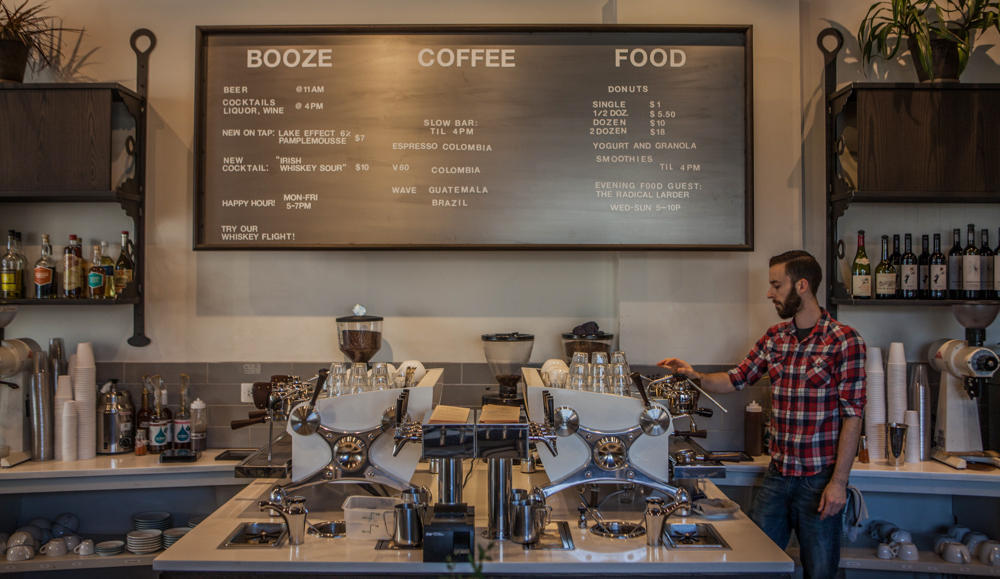
You know, you can see it as something to dread or something to take on and make great. We have these two espresso machines facing each other so that people who are both working on them can look at each other and communicate well and have fun talking to each other while they are pumping out drinks. I’m always checking in with them too, like, “You need water? You need anything?” I don’t know where it came from but I started saying, “Let’s rock!” or, “Rock and roll!” when things start getting crazy. Working with me, I just really want people to feel heard, and cared for and loved. And I also want them to see coffee for what it is! It’s such a beautiful fun and enjoyable thing and an upset customer doesn’t always have to take away from how much fun we’re having.
Thanks to Harris, Ipsento and John Bloedel for helping make things (like this story) wonderful.
If you're interested: reach out with a story of someone who makes their space wonderful.
koreykostek@gmail.com
site designed by Korey Kostek with help from Jack Doyle